Lizzie Chapman built something most people told her was impossible a credit platform for the 300 million Indian households that banks had written off entirely. The company she co-founded, ZestMoney, raised $151 million over eight years, became India’s most recognized buy-now-pay-later brand, and was eventually acquired by DMI Finance in a distress sale that closed in January 2024. Most profiles stop there, at the collapse. Lizzie Chapman’s story, however, doesn’t end with ZestMoney. By February 2025, she had already launched a second venture, stepped away from a third, and joined Berkeley Square Finance Group as a partner a career trajectory that reveals far more about her than any single headline. That part of the story is usually skipped.
Elizabeth Chapman Quick Bio
| Full Name | Elizabeth “Lizzie” Chapman |
| Nationality | British |
| Education | BSc, University of Edinburgh; CFA Charterholder |
| Known For | Co-Founder & CEO of ZestMoney; Co-Founder of SwiffyLabs |
| Current Role | Partner, Berkeley Square Finance Group (BSFG) |
| Based In | Mumbai, Maharashtra, India |
| Net Worth (Est.) | Not Publicly Disclosed |
| Marital Status | Married (husband’s name not publicly disclosed) |
| Awards | Female Fintech Leader, 2017; LinkedIn Top Voices: Finance & Economy, 2019 |
Lizzie Chapman’s Early Life and Education in the United Kingdom
Lizzie Chapman grew up in the United Kingdom, and while specific details about her childhood home are not publicly confirmed, she has spoken in interviews about a mother who encouraged independence and pragmatic thinking from an early age. In one well-documented account shared with Shenomics, Chapman recalled a moment at seventeen when she considered abandoning her university preparation to become a makeup artist her mother responded not with disapproval but with a series of practical questions about money, career longevity, and whether the decision had been fully thought through. That early lesson in economic reasoning would prove formative.
She went on to earn a BSc from the University of Edinburgh, one of the United Kingdom’s most academically rigorous institutions. After graduating, she also completed the Chartered Financial Analyst (CFA) program a credential that requires passing three demanding examinations and signals serious commitment to the technical side of finance. Most fintech founders arrive from product or engineering backgrounds; Chapman arrived with deep capital markets training, which is a distinction that shaped every company she later built.
Career Before ZestMoney: Goldman Sachs, Wellcome Trust, and Wonga
Lizzie Chapman began her professional career at Goldman Sachs, working in equity research and then asset management a foundation in institutional finance that few startup founders share. From there, she moved to the Wellcome Trust, one of the world’s largest endowments, where she spent over three years investing in financial services companies in India. That posting gave her something rare: she developed deep conviction about the Indian market’s potential years before most Western fintech players had taken it seriously.
In 2012, Chapman moved from London to Mumbai to set up and spearhead India operations for Wonga, one of the largest fintech companies in the world at that time. The Wonga India initiative was eventually put on hold, but the experience was not wasted it gave Chapman an operational understanding of digital credit in the Indian context that no amount of investment analysis could replicate. She then joined the Development Bank of Singapore and led the launch of Digibank, India’s first mobile-app-only bank. By 2015, she had spent the better part of four years running fintech operations in India. She knew the regulatory landscape, the technology infrastructure, and the credit gap. She also knew who she wanted to build with.
ZestMoney: How Lizzie Chapman Built India’s Largest BNPL Platform
In 2015, Lizzie Chapman co-founded ZestMoney alongside her ex-Wonga colleagues, making it a pathbreaker in the category of digital credit including BNPL, digital EMI, and personal loans. The idea was straightforward in concept but enormously difficult in execution: provide installment-based financing to Indian consumers who had no credit cards and no formal credit history, using AI-driven risk assessment rather than traditional underwriting. ZestMoney raised a total of $151 million across eleven funding rounds from investors including Goldman Sachs, Ribbit Capital, and Quona.
The company partnered with thousands of online merchants, allowing users to break purchases into EMIs at checkout a product that resonated deeply in a country where credit card penetration remains low relative to e-commerce growth. Chapman, as CEO, was the public face of ZestMoney throughout its scaling phase, speaking at conferences from Singapore to London and building the company’s credibility with institutional investors. She was honoured with the Female Fintech Leader award in 2017 and recognized among LinkedIn Top Voices: Finance & Economy globally in 2019. Which, given where she had started just a few years earlier, is remarkable.
The Fall of ZestMoney and What It Cost
ZestMoney’s collapse came swiftly and publicly. The company faced rising bad debts, a tightening regulatory environment for BNPL products, and a failed acquisition attempt by Walmart-backed PhonePe, which had conducted extensive due diligence before walking away. ZestMoney ceased operations in December 2023 following an unsuccessful acquisition attempt by PhonePe. DMI Finance ultimately acquired ZestMoney in what was widely reported as a fire sale, with the deal closing in January 2024.
Chapman and her co-founders had departed ZestMoney in July 2023, six months before the acquisition closed meaning they were no longer at the helm when the distress sale completed. The financial terms of the DMI acquisition were not publicly disclosed, and it is not confirmed what, if anything, ZestMoney’s founders received from the transaction. What is clear is that ZestMoney’s final valuation bore little resemblance to what investors had put in. The company’s FY23 revenues had grown 72 percent year-on-year before it shut down, according to reporting by YourStory which makes the collapse all the more striking. Good revenue growth and an inability to raise fresh capital proved to be incompatible in the post-2022 funding environment.
SwiffyLabs and the Jio Connection
Chapman did not sit still after ZestMoney. She co-founded SwiffyLabs in April 2024 in partnership with Ashish Anantharaman, another ZestMoney co-founder, after both had left ZestMoney in 2023. SwiffyLabs specializes in building loan origination, loan management, and payment systems to support embedded financial services. The startup operated under the umbrella of Jio Platforms, Reliance Industries’ digital subsidiary, with reports surfacing that Jio was planning to invest $100 million in the venture.
The SwiffyLabs chapter, however, was short-lived for Chapman. In February 2025, less than a year after SwiffyLabs’ official launch, Chapman stepped down from her executive role. A SwiffyLabs spokesperson confirmed to Inc42 that she would continue as an advisor, but the operational chapter had closed. Chapman had already founded Berkeley Square Finance Group in 2024, where she serves as a partner a firm focused on helping lending companies raise debt funding and access capital markets.
Lizzie Chapman’s Net Worth in 2026
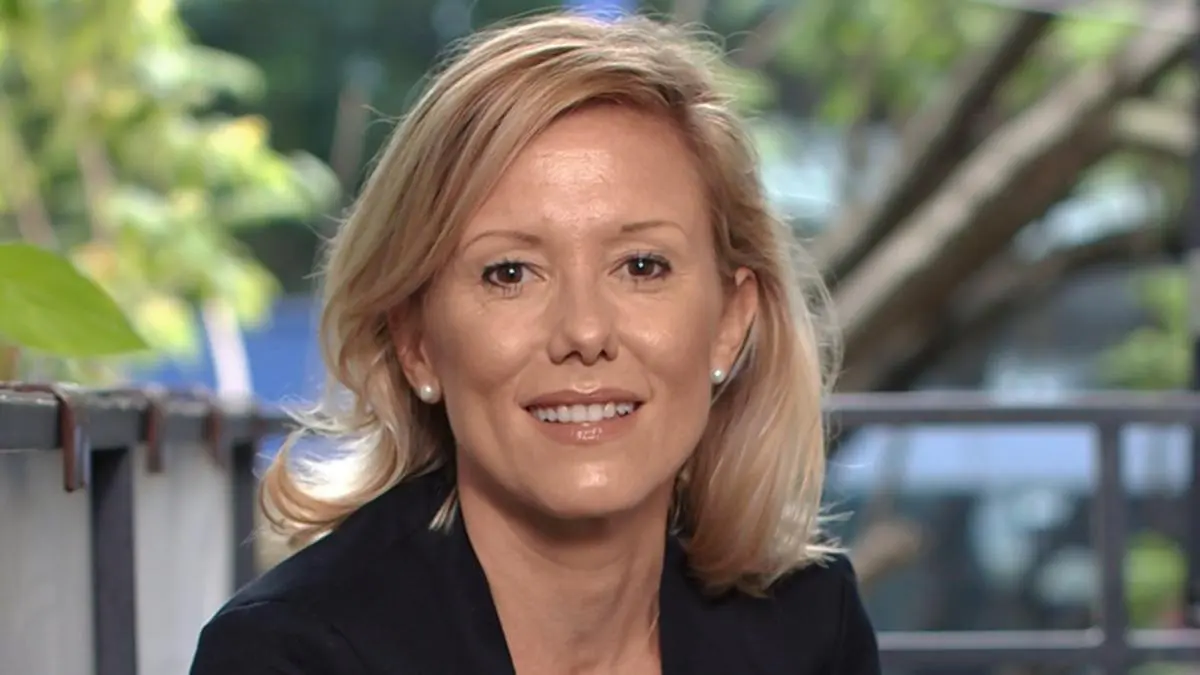
Lizzie Chapman’s net worth in 2026 is not publicly confirmed, and no credible financial database including Forbes, Crunchbase, or Bloomberg has published a verified figure. That absence of data is itself informative. Unlike many fintech founders, Chapman has not taken a company public, has not appeared on any billionaire or millionaire tracker, and has not disclosed personal financial information through any public filing.
What can be reasonably inferred from the available evidence: ZestMoney raised $151 million over its lifetime, and Chapman held a co-founder equity stake. The distress sale to DMI Finance is unlikely to have returned meaningful capital to founders after investor liquidation preferences. Her income from the Goldman Sachs period, the Wellcome Trust, and her advisory board positions including IndiaMart, Cloud Nine, and IndiaQuotient would represent accumulated compensation over a fifteen-plus-year career in high-level finance. Her current role at Berkeley Square Finance Group as a partner suggests a fee and revenue-sharing structure typical of boutique advisory firms. Most analysts familiar with the Indian fintech ecosystem would likely place her personal net worth in the range of several million dollars, driven primarily by career earnings rather than equity exit proceeds though any precise figure without public disclosure would be speculative.
Estimates of Chapman’s net worth vary depending on how one accounts for ZestMoney’s distress sale outcome. No Tier 1 or Tier 2 source has published a figure, and the nature of the DMI acquisition makes equity recovery uncertain. Based on her career earnings across Goldman Sachs, Wellcome Trust, Wonga, and over eight years as ZestMoney’s CEO, alongside board and advisory fees, most observers familiar with the Indian fintech space consider a multi-million-dollar personal net worth plausible though it likely excludes any significant ZestMoney exit premium.
Income Sources and Financial Foundations
Lizzie Chapman spent five years at Goldman Sachs in London, during which she would have earned compensation consistent with institutional asset management roles a segment where base salaries and bonuses for experienced CFA charterholders typically run well into six figures annually in British pounds. Her subsequent role at the Wellcome Trust, one of the UK’s most prestigious endowments, carried similar compensation structures. Over the period from her graduation through her move to India in 2011, Chapman likely accumulated significant personal savings that were independent of any startup outcome.
ZestMoney Founder Equity and CEO Compensation
As CEO and co-founder of ZestMoney from 2015 through mid-2023, Chapman drew a salary consistent with running a venture-backed company that eventually raised $151 million. Indian startup CEO compensation at scale-stage companies typically ranges from ₹2–4 crore annually in total compensation, and Chapman’s international profile and fundraising track record suggest she was compensated at the higher end of that range. Her founder equity stake, however, is the larger unknown and the distress acquisition by DMI Finance likely compressed that value substantially, given standard investor liquidation preferences at that funding level.
Board and Advisory Fees
Lizzie Chapman has served on the boards of Cloud Nine, a maternity healthcare company, and IndiaQuotient, an early-stage investment fund. She also served as a non-executive director of IndiaMart and Mahila Money. Non-executive director fees at listed Indian companies like IndiaMart are publicly disclosed and typically fall in the range of ₹15–25 lakh per year per board seat. Her collective advisory income across multiple seats, maintained over several years, represents a consistent secondary income stream that most profiles of Chapman have never quantified.
Berkeley Square Finance Group
Chapman’s current primary professional role is as a partner at Berkeley Square Finance Group, which she joined in October 2024. BSFG focuses on helping lending firms raise debt funding and access capital markets to strengthen their financial capabilities. Advisory and placement fees in the debt capital markets space are typically percentage-based on transaction size a structure that can generate significant income when deals close, though revenue is lumpy rather than predictable. The firm’s revenue is not publicly disclosed.
Personal Life and Life in Mumbai
Lizzie Chapman has been based in Mumbai since 2012, making it her home for more than twelve years. She has spoken openly about Mumbai in interviews comparing it favorably to London and noting that India had become her permanent home rather than a career posting. In one interview with YourStory, Chapman cited her husband as a primary source of personal happiness, naming him alongside building strong teams as the most meaningful parts of her life. Her husband’s name and background are not publicly disclosed.
Chapman has also spoken extensively about her approach to personal productivity eliminating television, prioritizing reading over social media, and building in unstructured time for friendships, which she identified in one Shenomics interview as a habit she had neglected and was actively working to restore. She describes herself as an extrovert who finds sustained isolation depleting. Whether she and her husband have children is not publicly confirmed, and no reliable source has indicated either way.
Interesting Facts About Lizzie Chapman
At seventeen, Lizzie Chapman nearly abandoned her university preparations to become a makeup artist. Her mother did not forbid it she simply asked three practical questions about money, the cost of training, and whether the decision had been fully considered. Chapman enrolled for university. That early willingness to interrogate a decision rather than react to it is a pattern that recurs throughout her professional life.
Chapman earned the Chartered Financial Analyst designation a qualification that typically takes candidates four or more years and multiple attempts to complete. Most prominent fintech founders are not CFA charterholders. The credential places her in a rare category: an operator with the technical depth of an institutional investor, which partly explains why sophisticated investors from Goldman Sachs and Ribbit Capital trusted her with $151 million in capital.
She was recognized as a LinkedIn Top Voice in Finance & Economy in 2019 not a regional award, but a global designation at a time when ZestMoney was still growing. The recognition came from written content she produced about financial inclusion and digital lending, suggesting a public intellectual dimension to her work that goes beyond pure startup execution.
Chapman co-founded the Digital Lending Association of India and served on its Executive Committee, which means she was actively helping to shape the regulatory framework that governed her own company. She also served on the Innovation Council of the National Payments Corporation of India, the body that oversees UPI India’s unified payments infrastructure. Her policy involvement is substantially more significant than most profiles of her acknowledge.
The Berkeley Square Finance Group, which Chapman joined in October 2024, was co-founded with Siddharth Das, formerly co-CEO of Jio Financial Services. The Jio connection is notable given that SwiffyLabs, Chapman’s previous venture, was also housed within Jio Platforms suggesting that even after stepping away from SwiffyLabs operationally in February 2025, her professional orbit remained connected to the Reliance ecosystem.
Conclusion
Lizzie Chapman’s career is the story of a British finance professional who chose a harder path when an easier one was available moving to Mumbai when she could have stayed in London, building for unbanked consumers when she could have served the already-wealthy, and rebuilding after a public company collapse when she could have retreated. ZestMoney was her defining chapter, but it was neither her first bet nor her last. The Elizabeth Chapman who built a $151 million company and the one who walked away from two ventures in eighteen months to join a boutique advisory firm is the same person: someone who treats each decision as a practical question to be answered, not an identity to be defended.
As of 2026, Lizzie Chapman is a partner at Berkeley Square Finance Group, an advisor to SwiffyLabs, and a continuing voice in India’s fintech policy conversation. Her net worth remains undisclosed, and the true financial outcome of the ZestMoney years may never be public. What is public is the record and it is more interesting, and more complicated, than most summaries of it have bothered to convey.
Frequently Asked Questions
Who is Lizzie Chapman?
Lizzie Chapman is a British fintech entrepreneur based in Mumbai, India. She co-founded ZestMoney in 2015, which became India’s largest buy-now-pay-later platform before being acquired by DMI Finance in a distress sale in January 2024. She currently serves as a partner at Berkeley Square Finance Group.
What is Lizzie Chapman’s net worth?
Lizzie Chapman’s net worth has not been publicly confirmed by any verified financial source. Based on her career at Goldman Sachs, eight years as CEO of ZestMoney, and multiple board and advisory roles, most observers consider a multi-million-dollar figure plausible, though no precise estimate can be verified.
What happened to ZestMoney?
ZestMoney ceased operations in December 2023 after failed acquisition talks with Walmart-backed PhonePe. DMI Finance subsequently acquired the company in a distress sale that closed in January 2024. The company had raised $151 million in venture funding over its lifetime, according to Tracxn.
What is Lizzie Chapman doing in 2026?
As of 2026, Lizzie Chapman is a partner at Berkeley Square Finance Group (BSFG), a firm that helps lending companies raise debt funding and access capital markets. She stepped down from her co-founder role at SwiffyLabs in February 2025 but continues as an advisor to that company.
Where did Lizzie Chapman go to university?
Lizzie Chapman studied at the University of Edinburgh, earning a BSc. She subsequently completed the Chartered Financial Analyst (CFA) program, a designation she holds alongside her Edinburgh degree.
What awards has Lizzie Chapman received?
Lizzie Chapman was named Female Fintech Leader in 2017 and was recognized as a LinkedIn Top Voice in Finance and Economy globally in 2019. She is also a founding member of the Digital Lending Association of India and has served on the Innovation Council of the National Payments Corporation of India.
About the Author