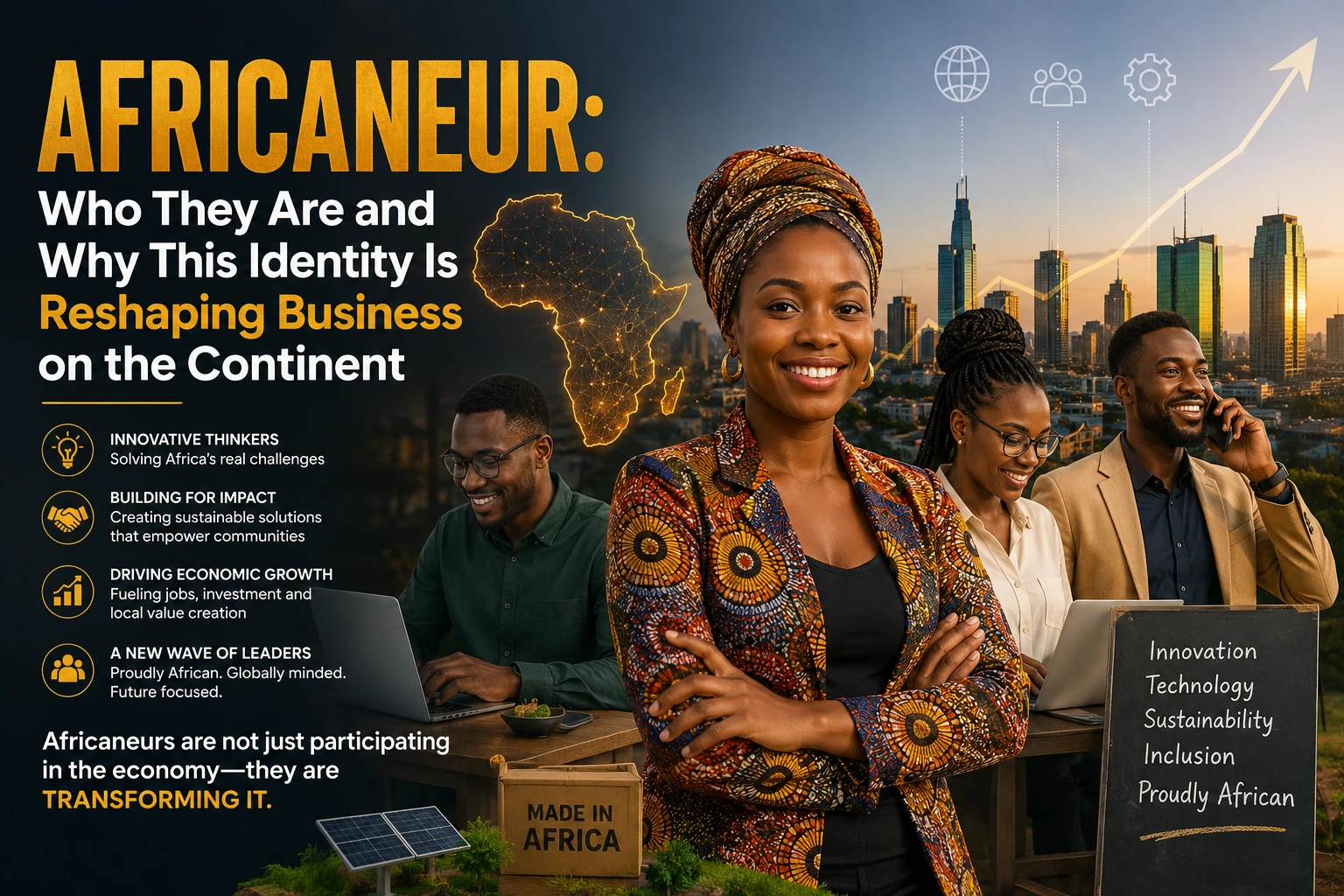
An africaneur is an African-origin entrepreneur who builds with deliberate cultural purpose someone whose business identity is rooted in where they come from, not just where they operate. The word is a blend of “African” and “entrepreneur,” coined independently by several communities, including Kalaria Ejindu, a Nigerian-American founder who launched the Africaneurs platform in New York, and later adopted by South African networks like Fio Africaneurs. This article covers what the term actually means across its different uses, the specific community platforms that have built around it, and the real structural conditions including 2025 funding data and documented failure rates that make the africaneur identity matter beyond branding.
What Is an Africaneur?
An africaneur is a person of African origin or connection who runs a business with conscious ties to their African identity, community, and the goal of solving real African problems. The word blends two ideas that, as one published source puts it, have “for too long been treated as separate: Africa and entrepreneurship.”
The distinction from the term “African entrepreneur” matters. An African entrepreneur is simply a person in Africa who runs a business a wide category that includes anyone from a street vendor to the CEO of a continental bank. The africaneur identity carries an additional layer of intention. It describes someone who sees their African background not as a constraint to work around, but as the foundation of how they build. That foundation includes cultural knowledge, understanding of local needs, and a commitment to growing communities alongside growing a business.
The term has been used independently in at least three distinct contexts. Kalaria Ejindu, a Nigerian-born, US-based founder, launched a platform called Africaneurs explicitly derived from “African entrepreneurs”as a network to help Africans in the diaspora build skills and connect. In South Africa, Christiaan Heymann launched Fio Africaneurs in 2025, a faith-based community of entrepreneurs meeting weekly in Pretoria. And AfricaneurIQ, a management consulting company based in South Africa, uses the africaneur concept as the foundation of its enterprise and supplier development work, explicitly recruiting what it calls “Africaneurs.” What all three share is a belief that African entrepreneurship is a distinct form of business identity not just a location marker.
There is no single founding moment for the term. Like many identity-driven words, it emerged organically across multiple communities before it had a formal definition.
The Three Communities Built Around the Africaneur Identity
The africaneur identity is not purely conceptual. Three distinct platforms have built real operational communities around it, each with a different structure, geography, and focus.
Africaneurs Inc. was founded by Kalaria Ejindu and is based in New York. According to the platform’s own description, it is “the number one platform for African entrepreneurs in Africa and the diaspora to turn their entrepreneurial aspirations into sustainable businesses.” Ejindu, who was born in Abia State, Nigeria, partly raised in Togo, and migrated to the United States in 2011, described the platform’s name in a 2017 interview as simply derived from “African entrepreneurs.” The platform has over 13,000 Instagram followers and 4,000 Facebook followers, and focuses on entrepreneurship content, skills development, and community building for Africans both on the continent and overseas.
Fio Africaneurs launched in Pretoria, South Africa, in May 2025. Founded by Christiaan Heymann and linked to the broader Fio Capital group, it is explicitly faith-based Ajay Wasserman, CEO of Fio Capital, described it as “a Christian, faith-based organisation.” Annual membership is priced at $250 and includes access to in-person weekly networking sessions, online meet-ups, business registration guidance, funding support, and a member marketplace. The platform’s first cluster meeting at Blos Café in Pretoria attracted entrepreneurs from real estate, cybersecurity, law, and consumer products. The concept spread faster than expected Heymann noted that people in Germany contacted them requesting their own cluster, meaning a local South African idea is evolving into a diaspora network. Testimonials on the Fio Africaneurs website include Lebohang Manyana, who described transforming an eight-year solo journey into a validated business after joining, and Clifford Lortan, who credited the community with ending his isolation and unlocking high-calibre professional connections.
AfricaneurIQ is a South African management consulting firm that uses the word in its company name. According to professional database profiles, it specialises in Enterprise and Supplier Development (ESD) a specific South African business development framework and recruits entrepreneurs it describes as having “raw talent and viable business models.” It describes its mission as taking the first qualifying small enterprise or emerging micro-enterprise to a stock exchange listing within 5 to 10 years. The company website (africaneuriq.co.za) returned a 403 error during research for this article, meaning its full content could not be independently verified, but third-party business databases confirm its registration and management consulting focus.
Each of these communities answers a different question: Africaneurs Inc. serves the diaspora. Fio Africaneurs serves locally-rooted South African entrepreneurs who want community and accountability. AfricaneurIQ serves founders ready for formal business development and eventual institutional growth.
The Numbers Behind Why the Africaneur Movement Has Real Weight
Understanding the africaneur identity requires understanding the actual scale of African entrepreneurship, because the data is more significant than most people outside the continent recognise.
Africa is the youngest continent on earth. Over 60 percent of the population is under 25, according to the World Economic Forum that is more than 200 million young people. By 2035, more young Africans will enter the workforce each year than in the rest of the world combined. Small and medium-sized enterprises already account for 80 percent of all jobs created on the continent, according to the same WEF source. Africa also has the highest rate of entrepreneurship of any region in the world.
The African tech funding environment is recovering after a difficult period. African tech startups raised $4.1 billion in total funding in 2025, up 25 percent from $3.25 billion in 2024, according to Partech’s annual Africa Tech Venture Capital Report. Equity funding grew 8 percent to $2.4 billion across 462 deals. This represents the strongest funding year since 2022. Fintech led all sectors, accounting for 32 percent of total equity funding at $769 million. South Africa ranked first in equity funding and deal count in 2025, reclaiming a position it last held in 2017.
On the diaspora side, Africa received approximately $95 billion in remittances in 2024, representing 5.2 percent of continental GDP, according to the World Bank a figure that exceeds official development assistance. Projections cited by the African Diaspora Network suggested 2025 could be the first year remittances to Africa cross $100 billion. A growing share of those transfers is being directed toward productive investment rather than household consumption.
These figures matter because they explain why the africaneur identity carries practical meaning: the scale of African entrepreneurship is large, the demographic pressure for economic solutions is urgent, and the diaspora dimension adds financial and knowledge capacity that was less organised a decade ago.
What the Africaneur Movement Identifies as Its Core Barriers
A serious look at the africaneur movement requires honest attention to what makes building businesses in Africa genuinely difficult. These are not edge cases or exceptions they are the structural conditions that every africaneur navigates.
The most consistent barrier is isolation. Fio Africaneurs’ own homepage leads with a striking statistic: over 70 percent of African businesses close within their first five years, citing UNCTAD 2025 research, and points specifically to isolation as the primary driver “not for lack of talent or ambition but because founders are forced to build in isolation.” The Partech funding data supports this interpretation from a different angle: despite 462 equity deals in 2025, funding remains “highly concentrated in four markets” Kenya, South Africa, Egypt, and Nigeria, which together captured 72 percent of total investment. An africaneur building in Ghana, Senegal, Mozambique, or Uganda faces a much thinner capital environment than peers in Nairobi or Lagos.
Access to formal credit remains limited. The Mastercard Foundation’s 2026 Africa Youth Employment Outlook found that 90 percent of young employed Africans currently work in informal jobs, primarily in agriculture. That informality is not just about income it also means most young entrepreneurs are building outside systems that provide credit scoring, collateral structures, or institutional support. Infrastructure gaps, fragmented regulatory environments across 54 national jurisdictions, and currency instability compound daily operational challenges for entrepreneurs trying to grow.
There is also a narrative problem. Most global media coverage of African business focuses on struggle and resilience framing success as remarkable specifically because of the obstacles. The africaneur identity pushes back against this framing by insisting on being recognised as a builder, not as an inspirational story about someone who succeeded against the odds.
The Diaspora Dimension: More Than Sending Money Home
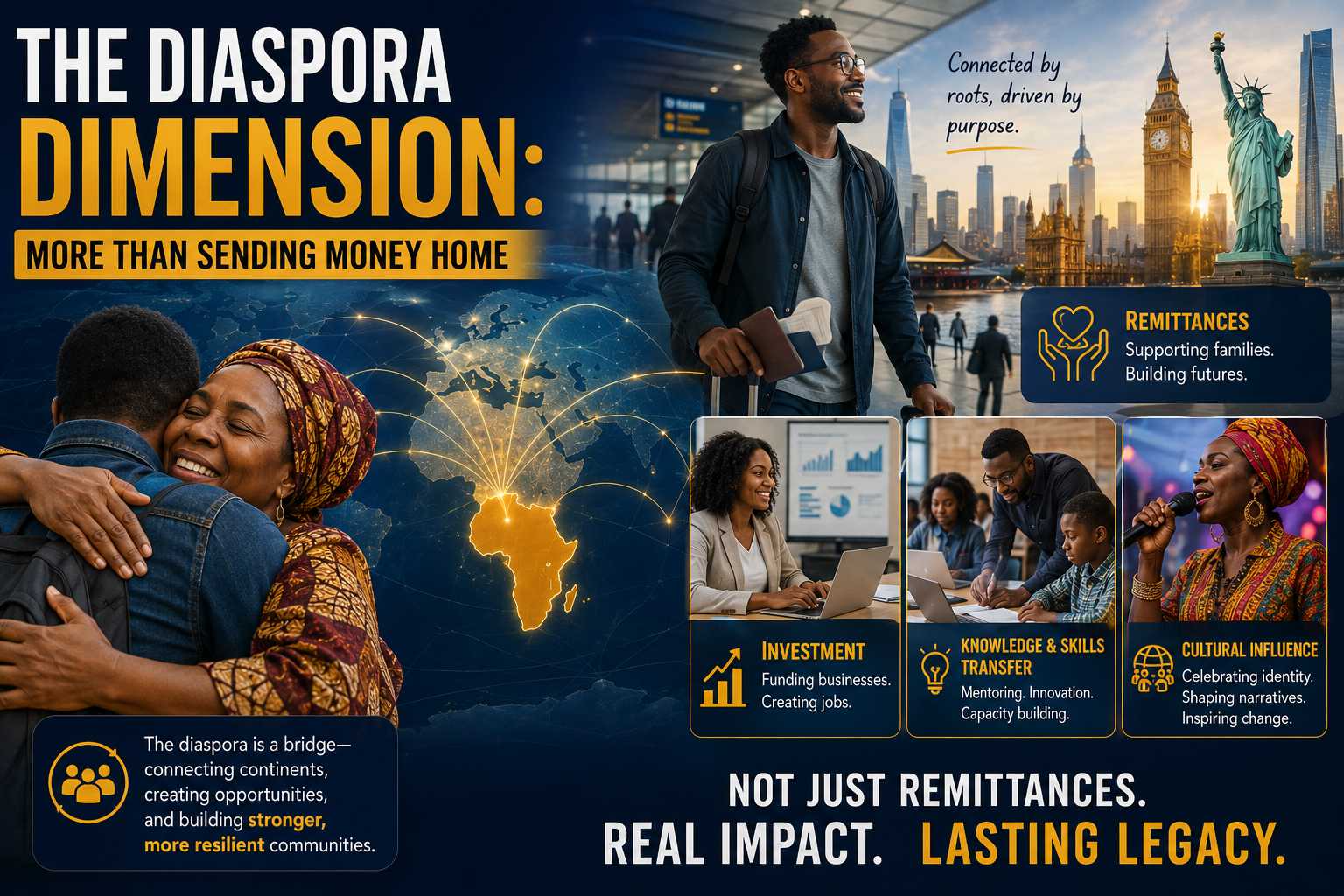
The africaneur identity has a specific meaning in the African diaspora that goes beyond remittances. Diaspora africaneurs the generation of Africans who grew up in cities like London, New York, Toronto, and Dubai hold a specific combination of advantages that the streetinsider.co.uk analysis of the movement described well: they understand global consumer preferences, can access deeper financial systems, and have built cross-cultural networks, all while carrying an African identity that shapes how they identify problems.
This is not theoretical. The flow of capital and ideas between diaspora and continent has become measurably bidirectional. The remittance data tells one part of that story, but the institutional part is equally important. The African Diaspora Network, based in Washington D.C., has convened over 11,000 individuals through programmes including its flagship Builders of Africa’s Future accelerator, which since 2018 has trained and supported 93 African entrepreneurs leading early-stage businesses in healthcare, agriculture, microfinancing, and education. The network also launched Women in Philanthropy and Impact Africa (WIPIA) as part of its 2024 United Nations General Assembly engagement, specifically to unlock the potential of female African changemakers.
The pattern here is that diaspora africaneurs are no longer primarily sending money back. They are co-founding, investing, mentoring, and advocating at a policy level. A founder who navigated Nigerian regulatory complexity while building a fintech in Lagos brings a specific kind of knowledge that is useful to an investor in London or a policymaker in Washington and increasingly, the structures to share that knowledge are being built deliberately.
Temi is a useful illustration of this pattern. She left Lagos at 22 to study finance in the UK, spent six years in banking in London, and returned to Nigeria at 30 to co-found a receivables financing platform for small manufacturers. She used her UK network to secure an initial funding round, her Lagos knowledge to navigate supplier relationships, and the Fio Africaneurs model of peer accountability to stay grounded during the difficult first year of operations. Her experience is not exceptional it is increasingly the standard story of the diaspora africaneur.
That covers who the africaneur is and where the real-world platforms operate now the more important question is whether belonging to this community actually changes outcomes for founders.
What Real Community Members and Observers Say
The testimonials on the Fio Africaneurs website offer the most direct user-level evidence available from fetched sources. Noeline le Roux wrote that since joining, “my business has become profitable,” attributing that change to guidance, support, and the right connections. Lebohang Manyana described transforming an eight-year solo effort into a “validated, impactful reality.” Clifford Lortan specifically named the problem that the community solved: “Before Fio Africaneurs, I struggled with isolation and fragmented access to high-calibre African partners.”
The Africa Business Heroes (ABH) 2025 programme, which brings together Africa’s top emerging founders for a summit in Kigali, documented that its 2025 top 10 cohort collectively operated in over 70 countries and served more than 1.5 million people. These founders represent a generation that, as the ABH write-up put it, is “reframing how African success is defined where others see constraints, they see catalysts.”
Forum discussions and community posts reflect a consistent theme: the value of the africaneur community is not the label but the accountability and connection it creates. Multiple Fio Africaneurs members in published testimonials described the problem as not capability but access access to people who understand the specific challenges of building in an African context, and who take those challenges seriously rather than treating them as background noise.
One common misconception worth correcting directly: the africaneur identity is not an Africa-only concept. As the Fio Africaneurs example shows, founders in Germany contacted the network asking for their own cluster. As Africaneurs Inc. shows, the platform was built in New York by a Nigerian-born founder specifically to serve Africans in the diaspora. Being an africaneur is not about geography it is about intentional connection to an African entrepreneurial identity, wherever the founder is building.
So far this article has covered what the africaneur term means, which platforms have been built around it, the economic data behind the movement, the structural barriers africaneurs face, and what the diaspora dimension looks like in practice. The section ahead looks at what the term means for someone encountering it for the first time and whether engaging with this identity is worth the investment of time and money.
Is Calling Yourself an Africaneur or Joining These Communities Worth It?
The africaneur label by itself is worth nothing. Words without structure do not help anyone build a business. The real question is whether the communities that have formed around this identity provide practical value and based on what the research found, the answer is yes, with clear conditions.
For founders in South Africa who can attend the weekly Fio Africaneurs sessions in Pretoria, the community appears to offer real value based on specific documented outcomes. The $250 annual membership includes networking, funding guidance, business registration support, and media exposure and the testimonials available describe concrete business outcomes, not vague inspiration. The faith-based orientation is a genuine feature, not a background detail: it shapes how the community functions and what it prioritises. For founders who align with that orientation, this is a strength. For those who do not, it is worth knowing before joining.
For founders in the African diaspora, particularly in the US and UK, Africaneurs Inc. has been operating since at least 2017 and has built a real following. The platform focuses primarily on content and community rather than operational services like funding access, which makes it most useful for founders at an early stage who need motivation, connection, and peer exposure.
For South African small business owners seeking formal enterprise development support, AfricaneurIQ represents a more structured option though the platform’s website was inaccessible during research and its details could not be independently verified at the time of writing.
The broader africaneur movement beyond specific platforms is worth taking seriously because the problem it addresses is real. The 70 percent business failure rate driven by isolation, documented by UNCTAD and cited by Fio Africaneurs, is not a narrative construct. The concentration of African tech funding in four countries, leaving founders in most of the continent’s 54 markets relatively under-resourced, is not a technicality. Founders who build alone in those conditions are fighting structural headwinds. Those who find genuine peer communities whatever those communities are called perform better.
This is not just an Africa story. The africaneur movement is pushing toward a version of entrepreneurship that the broader global business culture increasingly claims to want: purpose-driven, community-rooted, and connected to problems that genuinely need solving.
Conclusion
The africaneur is an entrepreneur who carries African identity as a core part of how they build not a demographic category, but a deliberate stance. The term has been used independently by multiple communities, from New York to Pretoria, and has generated real operational platforms with documented member outcomes. The structural context backing the movement is significant: over 80 percent of African jobs created by SMEs, $4.1 billion in 2025 tech funding, a youth population that will reshape global workforce dynamics within a decade, and a diaspora sending more than $95 billion home annually.
If you have encountered the africaneur identity and are wondering whether it deserves your attention, the answer depends on what you are looking for. As a concept, it offers a more precise framework than “African entrepreneur.” As a community, the platforms built around it particularly Fio Africaneurs for South Africa-based founders offer structured support addressing the isolation that research consistently links to business failure. Look up the specific platforms relevant to your geography, assess whether their orientation aligns with your values, and judge the community by its actual member outcomes, not its branding.
Frequently Asked Questions About Africaneur
Q: Where does the word “africaneur” come from?
The word blends “African” and “entrepreneur.” Kalaria Ejindu, a Nigerian-American founder, described it in a 2017 interview as simply derived from “African entrepreneurs” when naming her diaspora business platform. The term has since been adopted independently by several other organisations and communities.
Q: Is an africaneur the same as an African entrepreneur?
The terms overlap but are not identical. An African entrepreneur is anyone of African origin running a business. An africaneur specifically describes someone whose business identity is rooted in African culture and community purpose the identity carries intentionality that the broader term does not.
Q: What is Fio Africaneurs and how does it work?
Fio Africaneurs is a South Africa-based networking community for entrepreneurs, launched in May 2025 in Pretoria by Christiaan Heymann. Annual membership costs $250 and includes weekly in-person and online networking sessions, funding guidance, business registration support, and access to a member marketplace. It is explicitly faith-based and aims to expand across Africa and into diaspora communities.
Q: Does the africaneur identity apply to people outside Africa?
Yes. Platforms like Africaneurs Inc. were built specifically for Africans in the diaspora the founder launched it from New York. Fio Africaneurs also began receiving requests from potential members in Germany. The africaneur identity is about cultural and entrepreneurial orientation, not physical location.
Q: Why do African businesses fail at such a high rate?
Fio Africaneurs’ website cites UNCTAD 2025 research finding that over 70 percent of African businesses close within five years, identifying isolation as the primary cause founders building without access to networks, mentorship, or peer accountability. Limited access to formal credit and concentrated venture capital funding also play documented roles.
Q: Are there specific sectors where africaneurs are most active?
Based on 2025 Partech data, fintech is the dominant sector for African tech startups, representing 32 percent of equity funding. Africaneur-linked communities and commentary point to agriculture, creative industries, healthcare, and education as sectors where purpose-driven African entrepreneurs are building alongside technology.
About the Author